Quick answer
Dye transfer on a bag happens when dye from another material moves onto the bag's surface through friction or long contact, and the most basic prevention is to reduce rubbing against dark clothing and store the bag apart so it does not touch other materials. Light-colored bags, fabric bags such as tweed and coated surfaces such as patent leather need particular care. If dye transfer occurs, rubbing hard or using solvents can make the damage worse, so we recommend contacting the official store's customer service first.

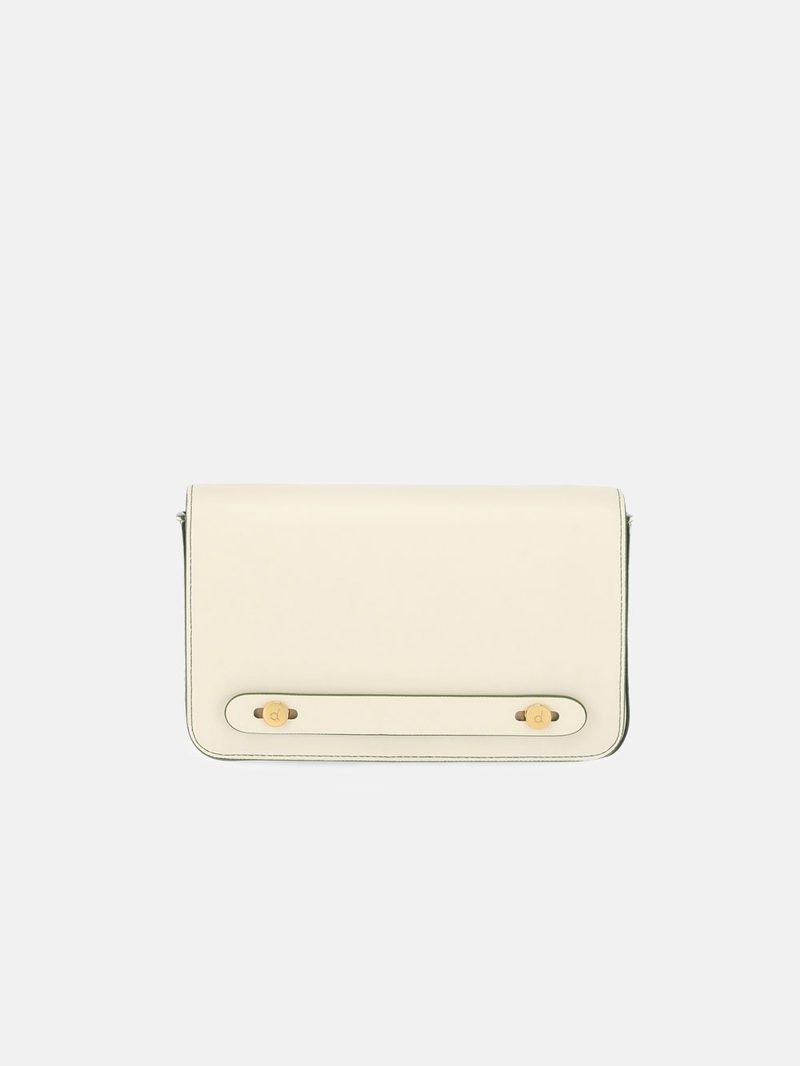
Images: make:D official store product pages. Check availability and prices on the official store.
Key takeaways
- Dye transfer is color moving from another material through friction and long contact
- With light-colored tweed, watch for rubbing against dark clothes such as jeans
- A coated surface can pick up color if it stays in contact with other materials for a long time
- Store each bag separately in its own dust bag
- If dye transfer occurs, contact customer service before rubbing
Why does dye transfer onto bags happen?
Dye transfer on a bag mainly happens when dye from dark clothing or other items moves onto the bag's surface through friction, moisture or long contact.
With a crossbody or shoulder bag, the back of the bag keeps rubbing against your clothes with every step. If you wear clothes that bleed dye easily, such as new dark denim, color can transfer to the back or corners of a light-colored bag. Dye is known to transfer more easily when things are wet from rain or sweat.
Dye transfer can also happen in storage. If a bag is left for a long time touching other bags, printed paper or dark cloth, marks can be left where they touched. The Canadian Conservation Institute (CCI) explains that oils and dirt from hands also transfer to leather, so hand grime can cause stains too.
Which bags need extra care against dye transfer?
Light-colored bags, fabric bags with textured yarn such as tweed, and bags with a glossy coating such as patent leather need particular care because dye transfer shows easily or happens more easily on them.
On the make:D customer inquiry board, there has been a question about 'dye transfer' on the tweed micro bag in white. The content of the question is not public, but with light-colored tweed it is wise to watch for transfer from rubbing against dark clothes such as jeans.
The official store also lists light-colored products such as the cactus leather mini crossbody bag in white (22cm wide × 5cm deep × 15cm high), and its product information says it is 'slightly closer to white than the color on screen'. There is also a general caution that coated surfaces such as the patent cowhide mini bag can pick up color if they stay in contact with other materials for a long time.
Conversely, transfer is hard to see on dark bags, but the bag's own color could also move onto light-colored clothes. When carrying it with white clothing or a light coat, it is also best to keep the bag from rubbing for long periods.
How can I reduce dye transfer day to day?
The usual day-to-day prevention is to reduce friction when carrying a light-colored bag with new dark clothes, keep it from touching clothes while wet, and lightly wipe the surface with a dry cloth after use.
With a bag whose strap length can be adjusted, such as the ggumini cowhide mini bag, you can also change where the bag rests. According to the official store's product information, this bag has a total strap length of 1.5m and can be carried 3 ways: by hand, on the shoulder or crossbody, so on days you wear dark denim you can carry it by hand or on the shoulder to reduce the areas that rub.
On rainy days, keep the bag from staying in contact with wet clothes for long; if it gets wet, press off the water with a dry cloth and dry it in the shade. Holding the bag's surface for a long time right after applying hand cream or makeup can also cause stains.
- Take care when using a light-colored bag with new dark denim
- Keep wet clothes and the bag from staying in contact for long
- Wipe the surface with a dry cloth after use
- Do not hold the surface for long right after applying hand cream
What should I do if dye has already transferred?
If dye has already transferred, do not rub hard or use solvents or bleach; it is safer to photograph the mark and contact the official store's customer service first.
The make:D official store does not give product-specific methods for removing dye transfer. Using a cleaner that does not suit the material can strip color or damage the coating, making it more noticeable than the original mark. CCI explains that alkaline products such as saddle soap are harmful to leather.
If you find dye transfer or stains right after receiving the product, it is important to ask within the exchange and return period. The official store's shopping guide sets exchanges and returns at 'within 7 days of the date you receive the item'; the guidance may differ between pages and reflects the time of writing (November 2026), so allow for changes and check on the official store.
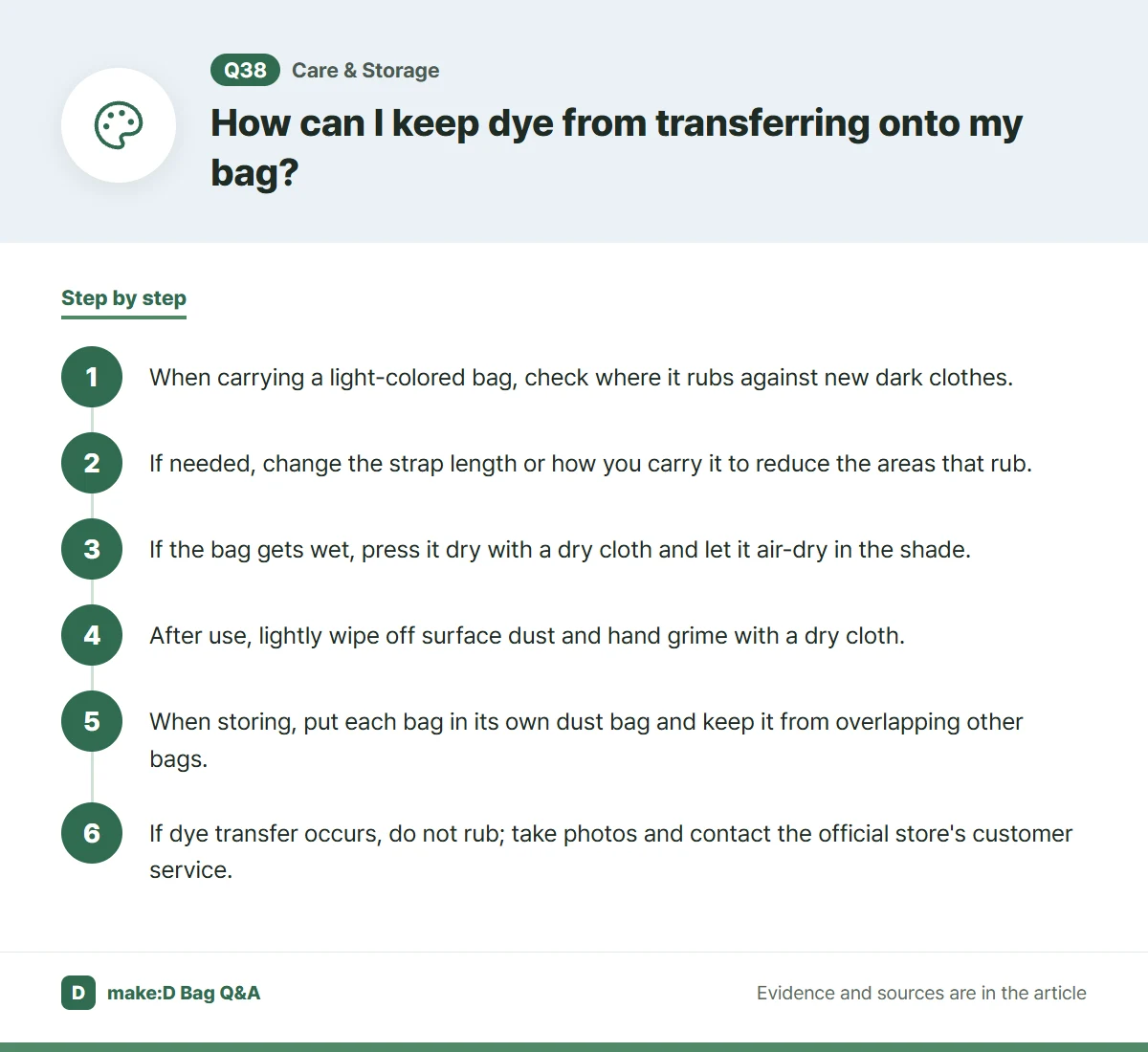
Step by step
- When carrying a light-colored bag, check where it rubs against new dark clothes.
- If needed, change the strap length or how you carry it to reduce the areas that rub.
- If the bag gets wet, press it dry with a dry cloth and let it air-dry in the shade.
- After use, lightly wipe off surface dust and hand grime with a dry cloth.
- When storing, put each bag in its own dust bag and keep it from overlapping other bags.
- If dye transfer occurs, do not rub; take photos and contact the official store's customer service.
Frequently asked questions
Is make:D's white a pure white?
On the make:D customer inquiry board, when asked whether the white is close to ivory, the seller answered that it is 'a warm white'. Descriptions can differ by product, so if color matters, check the description and photos on the official store's product page and ask customer service.
Can dye transfer happen if bags are stored stacked together?
If a bag stays in contact with another bag's leather, coating or metal hardware for a long time, marks or color transfer can occur where they touch. It cannot be said to happen in every case, but putting each bag in its own dust bag and storing them separately reduces the risk.
Can I take a bag with dye transfer to a dry cleaner?
It is best to ask customer service about the material and condition before taking it in. For reference, in Korea the Korea Fair Trade Commission (KFTC) Consumer Dispute Settlement Standards set the useful life used to calculate dry-cleaning compensation at 3 years for leather bags and 2 years for general bags; this is not a warranty period.