Quick answer
There is no official guidance on whether you can wash or iron a hemp bag, so the safest step is to ask the seller's customer service first. The make:D Sambe Jiterian bags also have no washing instructions, and there is no reliable public source setting out how to wash hemp cloth at home. A cautious general approach is to dab small stains with as little water as possible, avoid wringing hard, and watch out for fold marks and moisture.
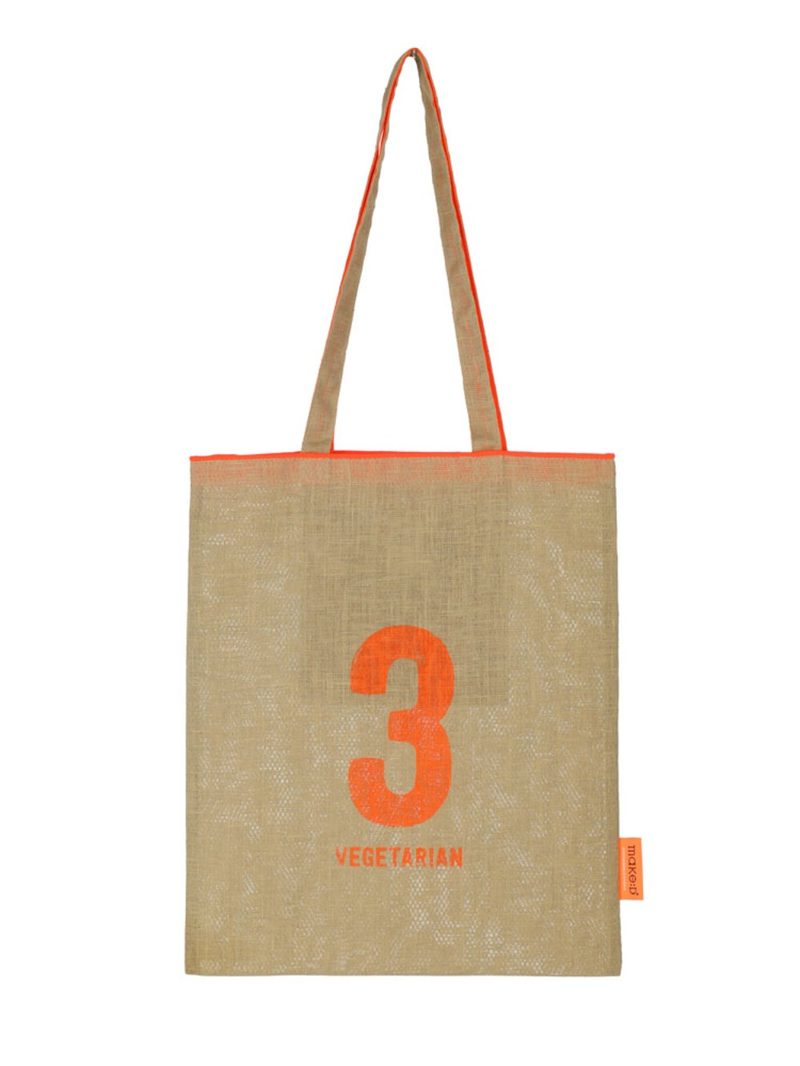
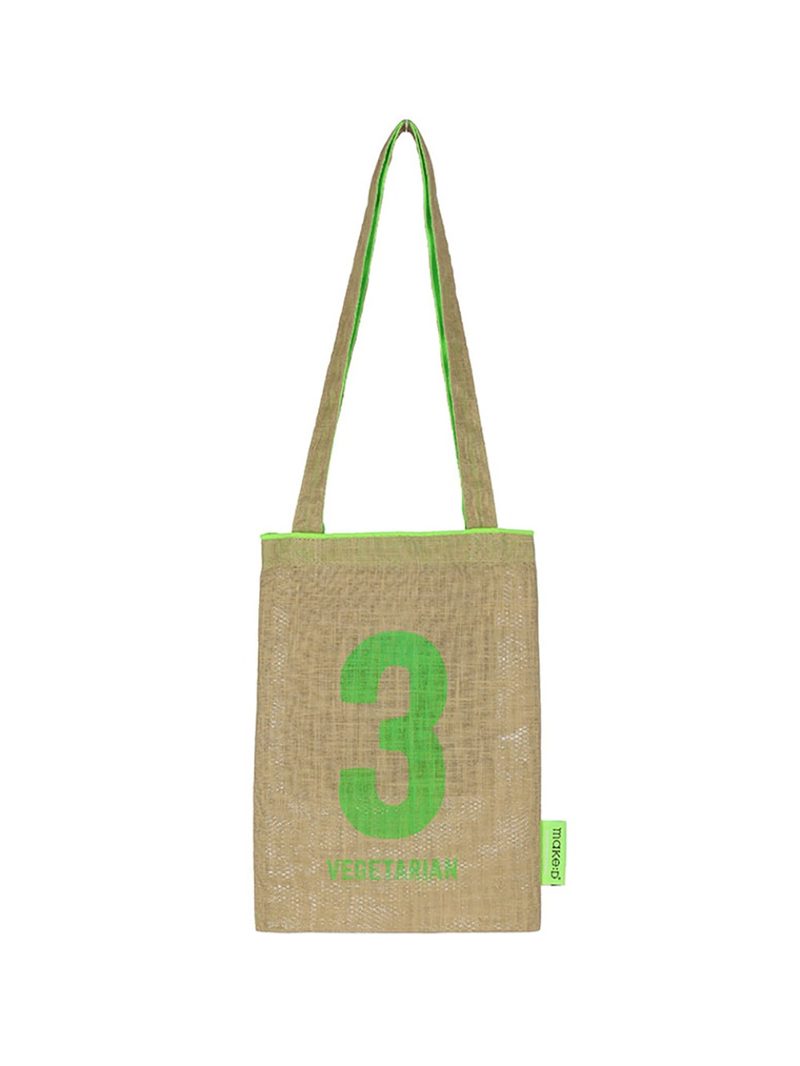
Images: make:D official store product pages. Check availability and prices on the official store.
Key takeaways
- The make:D Sambe Jiterian bags have no official washing instructions
- Asking customer service before washing or ironing is the safest step
- For small stains, use as little water as possible and do not wring hard
- Sharply folding in the same place again and again can break the fibers (CCI)
- At 90% relative humidity, mold can appear within a few days (CCI)
What fabric are make:D hemp bags made of?
According to the official store's product information, the material of the make:D Sambe Jiterian shoulder bags and eco bags is listed as 'Andong hemp'.
Andongpo is hemp cloth made from hemp grown in the Andong area of North Gyeongsang Province through the full traditional hemp weaving process (Encyclopedia of Korean Culture). The Korea Heritage Service explains that hemp cloth absorbs sweat quickly, dries fast, breathes well and is highly durable against friction, so it is damaged less in washing.
However, the Korea Heritage Service is describing the general properties of hemp cloth as a clothing fabric. The make:D Sambe Jiterian bags also have a '3 VEGETARIAN' print and Grapefruit (orange) or Lime (green) trim, so whether they can be washed the same way as plain cloth needs to be checked separately.
Can I wash the whole hemp bag?
There is no official guidance on washing a whole hemp bag, so we recommend asking the official store's customer service before washing and, until then, only treating small stains carefully.
The Canadian Conservation Institute (CCI) textile care guidelines explain that loosely woven fabrics can shrink irreversibly when washed. Many hemp fabrics have visible gaps between the threads, so keep in mind that the size or shape may change after washing in water.
For a small stain, a careful method is to wring out a damp cloth thoroughly so it carries as little water as possible and then gently dab the spot. Avoid wringing the fabric hard, which can strain the fibers and the shape; press off the moisture with a dry cloth and dry the bag in the shade.
If the whole bag is dirty, taking photos of where and how widely it is soiled makes the consultation easier. The official store's customer service operates during weekday daytime hours and is closed on weekends and public holidays; check the official store for exact hours. You can also ask via the KakaoTalk channel (search make:D).
- Ask customer service before washing
- Dab small stains with as little water as possible
- Do not wring hard
- Air-dry in the shade
Can I iron a hemp bag?
There is no guidance on whether make:D hemp bags can be ironed or at what temperature, so if ironing is needed, it is safer to check first with customer service whether you can avoid the print and trim.
CCI explains that linen (flax) has low elasticity and wrinkles easily. Hemp is a similar plant fabric and wrinkles easily too, and one option is to see wrinkles as part of the natural material's texture and leave them be. The product page also presents 'the texture and color unique to natural materials' as a feature.
If you want fewer wrinkles, laying the bag flat or hanging it when not in use can be an alternative that uses no heat. Keep in mind that if the print deforms or the trim color changes after heat is applied, it is hard to undo.
How should I store a hemp bag?
The general principle is to store a hemp bag fully dry, with as few folds as possible, somewhere cool, not humid and out of the light.
According to CCI, plant fabrics such as linen can have their fibers break if sharply folded in the same place again and again, and can yellow under ultraviolet light, especially along fold lines. If you must fold it, we recommend padding the fold with acid-free paper or cotton.
Humidity matters too. CCI explains that at 70% relative humidity it takes three months or more for mold to grow, but at 90% it can appear within a few days. Dry a hemp bag fully after it gets wet from rain or sweat before storing it; keeping it somewhere cool also slows chemical deterioration.
Step by step
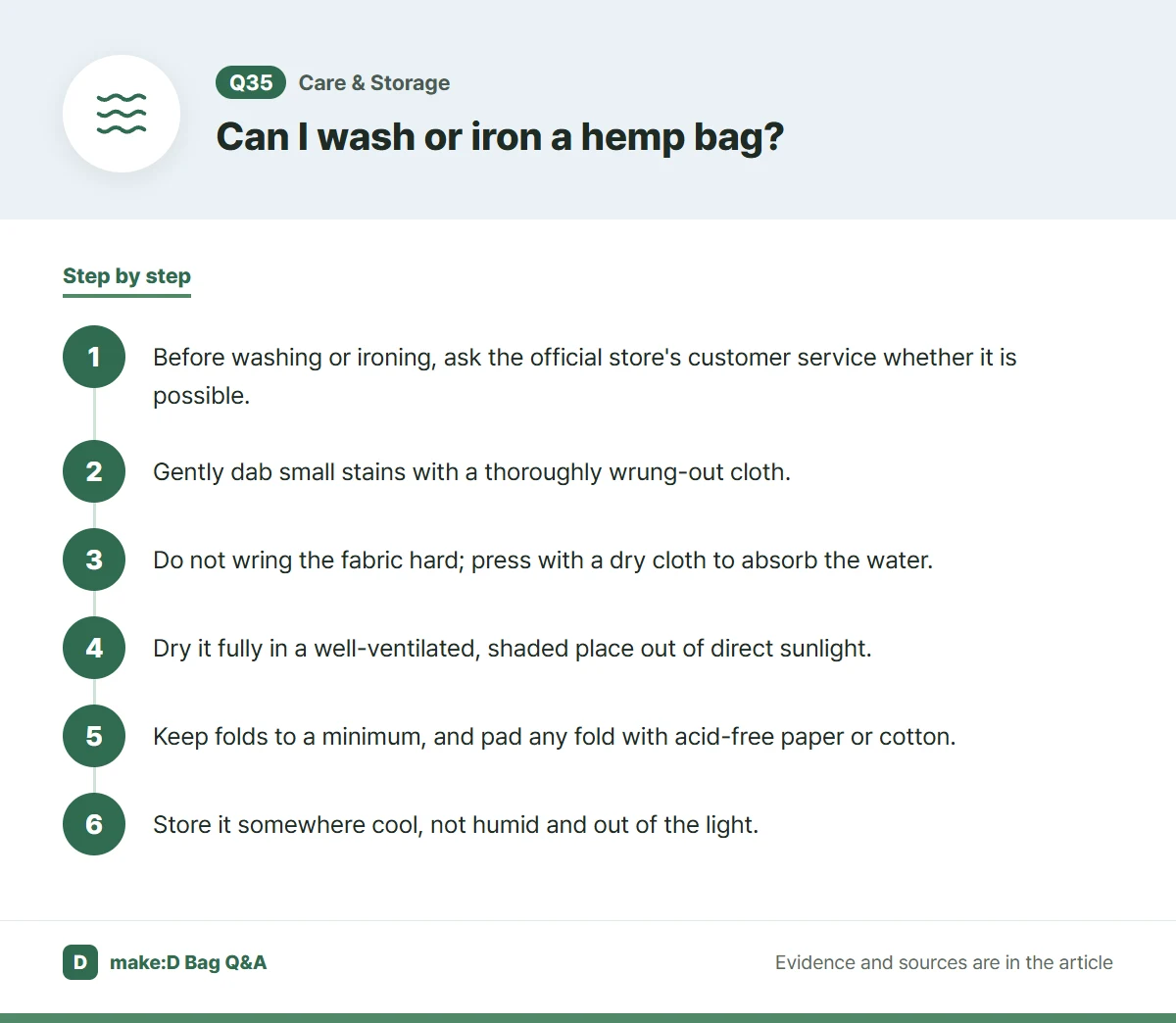
- Before washing or ironing, ask the official store's customer service whether it is possible.
- Gently dab small stains with a thoroughly wrung-out cloth.
- Do not wring the fabric hard; press with a dry cloth to absorb the water.
- Dry it fully in a well-ventilated, shaded place out of direct sunlight.
- Keep folds to a minimum, and pad any fold with acid-free paper or cotton.
- Store it somewhere cool, not humid and out of the light.
Frequently asked questions
Can the washing instructions for make:D T-shirts be used for the hemp bag?
The only product on the official store with washing instructions is the 100% cotton basic short-sleeve plain T-shirt, and those instructions are for the cotton T-shirt. A hemp bag differs in fabric and construction, so do not apply the T-shirt washing method as it is; check separately with customer service.
My hemp bag has turned yellow. Why?
CCI explains that plant fabrics such as linen can yellow under ultraviolet light, especially along fold lines. Besides light, discoloration can have several causes, such as dirt or moisture, so if you are worried about its condition, contact customer service with photos.
How can I keep mold from growing on my hemp bag?
The most important thing is not to store it wet. According to CCI, clean plant materials resist mold up to about 80% relative humidity, but at 90% mold can appear within a few days. We recommend drying it fully and keeping it somewhere ventilated.