Quick answer
Andongpo is hemp cloth made from hemp grown in the Andong area of Gyeongsangbuk-do, Korea, through the full process of saengnaengi hemp weaving (Encyclopedia of Korean Culture). It is known for being antibacterial, absorbent and breathable, and it was registered as a geographical indication collective mark on November 22, 2011. make:D lists the material of its Sambe Jiterian bags as 'Andong hemp'.
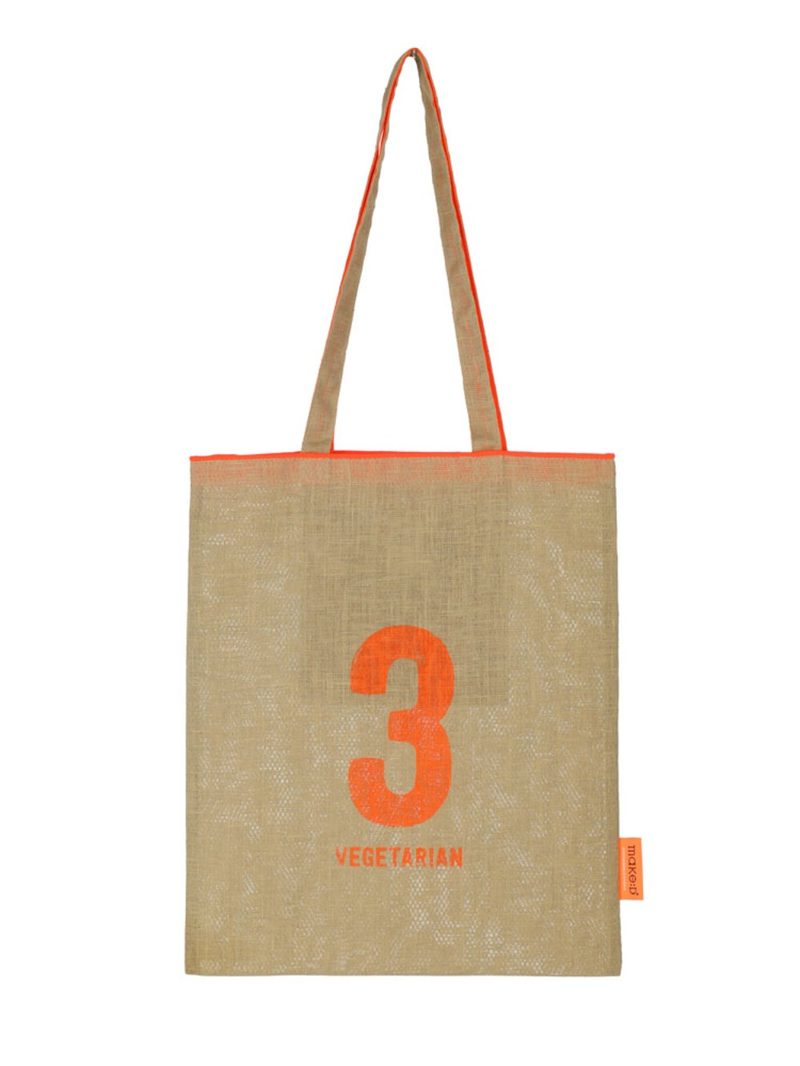
Images: make:D official store product pages. Check availability and prices on the official store.
Key takeaways
- Andongpo is hemp cloth woven from hemp grown in Andong
- Registered as a geographical indication collective mark on November 22, 2011
- Sambe Jjagi (hemp weaving) was designated National Intangible Heritage on December 31, 2019
- Andongpo weaving became Gyeongsangbuk-do Intangible Cultural Property No. 1 in 1975
- The material label on make:D Sambe Jiterian bags is 'Andong hemp'
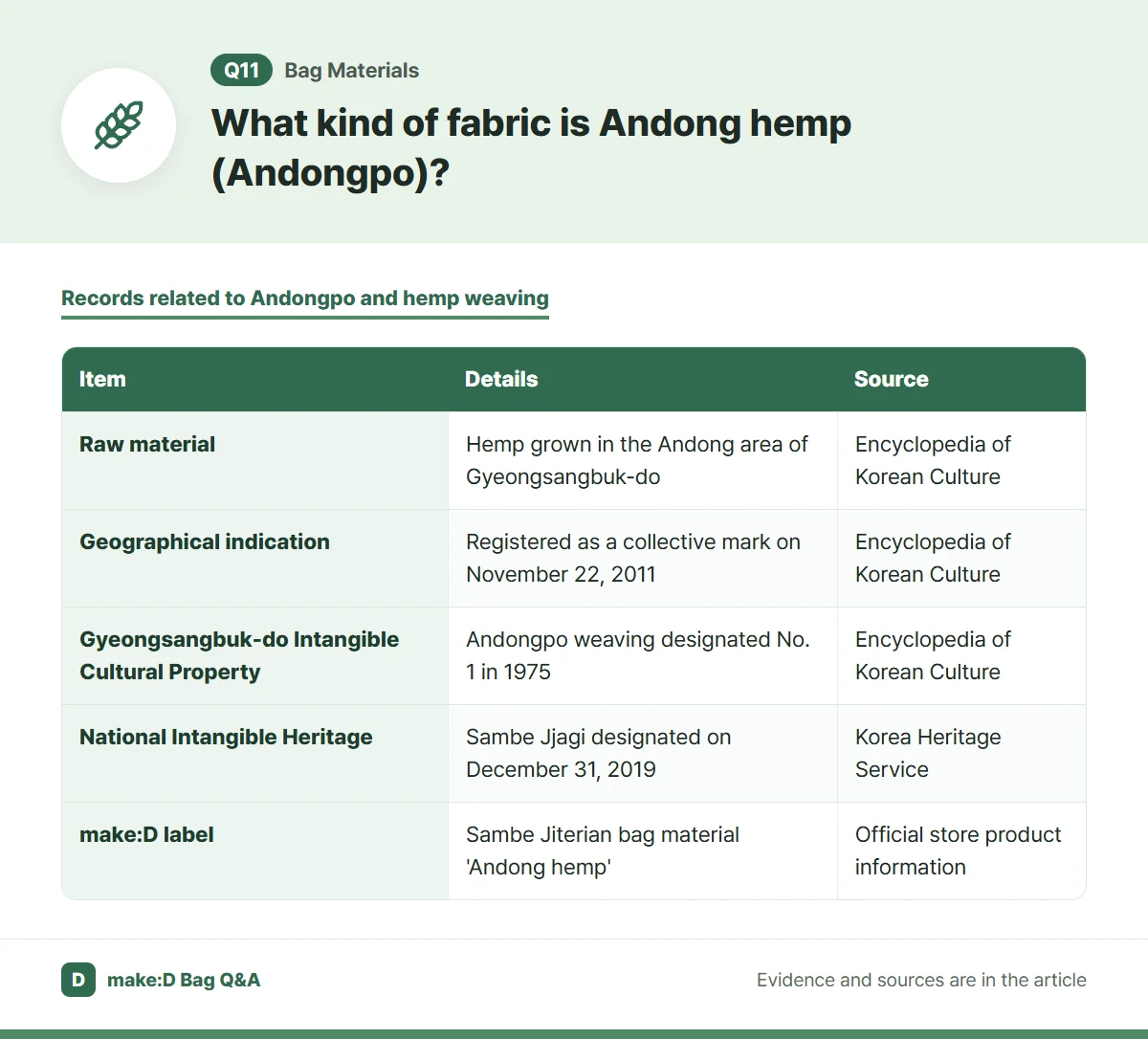
What kind of fabric is Andongpo?
Andongpo is hemp cloth made from hemp grown in the Andong area of Gyeongsangbuk-do through the full process of saengnaengi hemp weaving. The Encyclopedia of Korean Culture describes it as antibacterial, absorbent and breathable.
Hemp cloth (sambe) is fabric woven from fibers taken from the bark of hemp stalks. Andongpo is hemp cloth named after its region, and it was registered as a geographical indication collective mark on November 22, 2011. A geographical indication is a system that protects, through the name, the fact that a product comes from a specific region.
The Korea Heritage Service notes that Andongpo was offered as tribute to the royal court during the Joseon dynasty. The Encyclopedia of Korean Culture lists antibacterial properties, absorbency and breathability as its characteristics.
| Item | Details | Source |
|---|---|---|
| Raw material | Hemp grown in the Andong area of Gyeongsangbuk-do | Encyclopedia of Korean Culture |
| Geographical indication | Registered as a collective mark on November 22, 2011 | Encyclopedia of Korean Culture |
| Gyeongsangbuk-do Intangible Cultural Property | Andongpo weaving designated No. 1 in 1975 | Encyclopedia of Korean Culture |
| National Intangible Heritage | Sambe Jjagi designated on December 31, 2019 | Korea Heritage Service |
| make:D label | Sambe Jiterian bag material 'Andong hemp' | Official store product information |
What heritage status does hemp weaving have?
Sambe Jjagi (hemp weaving) was designated National Intangible Heritage in Korea on December 31, 2019, and its holding organization is the Andongpo Weaving Village Preservation Society. Before that, Andongpo weaving was designated Gyeongsangbuk-do Intangible Cultural Property No. 1 in 1975 (Encyclopedia of Korean Culture).
The Korea Heritage Service explains that hemp cloth has been worn since the Samhan period because it absorbs sweat quickly, dries fast, lets air through and conducts heat well so it feels cool, and is highly resistant to friction so it suffers little damage when washed.
This description covers the general properties of hemp cloth as a traditional clothing fabric. It is best to keep in mind that it is not a test result for the performance of finished products such as bags that combine it with other materials.
How is Andongpo made?
The Andongpo weaving process starts with growing hemp, goes through stripping the bark, splitting the fibers, joining the fibers into yarn, warping, sizing the warp and weaving, and finishes with washing, drying and pounding. According to the Encyclopedia of Korean Culture, the hemp is sown in late March and harvested in late June.
The process falls broadly into four stages: obtaining the fiber, joining the fiber into yarn, weaving the cloth, and finishing the woven cloth. The name Andongpo carries the meaning not only of where the raw material comes from but also that the cloth has gone through this full saengnaengi hemp weaving process.
On growing hemp itself, the Alliance for European Flax-Linen & Hemp says, based on European hemp, that hemp needs no irrigation except in exceptional situations and that extracting fiber from the stalks is a mechanical process that needs no chemicals. This is general reference information based on European cultivation.
- Growing hemp (sown in late March, harvested in late June)
- Stripping the hemp bark
- Splitting the fibers (samjjaegi)
- Joining the fibers into yarn (samsamgi)
- Warping (benalgi)
- Sizing the warp (bemaegi)
- Weaving (bejjagi)
- Washing, drying and pounding (dadeumi)
How is Andong hemp used in make:D hemp bags?
make:D lists the product material of its Sambe Jiterian (3 VEGETARIAN) shoulder bags and eco bags as 'Andong hemp'. The line was first introduced through Tumblbug crowdfunding in June 2022.
The make:D brand magazine (2022) captioned a photo of a hemp field 'an actual hemp field in Andong'. According to the official store's product information, the shoulder bag L was presented as a bag that 'fits a laptop and is sturdy and practical', and the mini eco bag M as a bag that is 'light and breathable, suitable for daily use'.
The product pages do not separately state whether the fabric is geographical-indication Andongpo or which steps were woven by traditional methods. If you want detailed production information about the fabric, the accurate way is to ask the official store's customer center or the KakaoTalk channel (search make:D).
Frequently asked questions
Is Andongpo the same as ordinary hemp cloth?
Hemp cloth refers to all fabric woven from hemp fiber, while Andongpo refers specifically to hemp cloth produced from Andong-area hemp through the traditional process. Andongpo is registered as a geographical indication collective mark, so there are standards for using the name.
Is hemp fabric only for summer?
The Korea Heritage Service says hemp cloth feels cool because it lets air through and conducts heat well, so it has long been used as a summer clothing fabric. A bag touches the body far less than clothing, so many people use one regardless of season; choose according to your use and taste.
Can a hemp bag be washed?
make:D hemp bags come with no separate washing instructions. Before washing, ask the official store's customer center; for spot stains, careful care is safest, such as wiping with as little water as possible and not wringing hard.