Quick answer
Cactus leather is not animal leather but a plant-based vegan leather made by mixing cactus material with polyurethane (PU) and dyes and coating it onto a fabric. In its brand magazine (2022), make:D says it is 'made by mixing cactus extract with PU polyurethane and dyes and coating it onto a fabric', and the brand uses cactus leather imported from Desserto in Mexico.
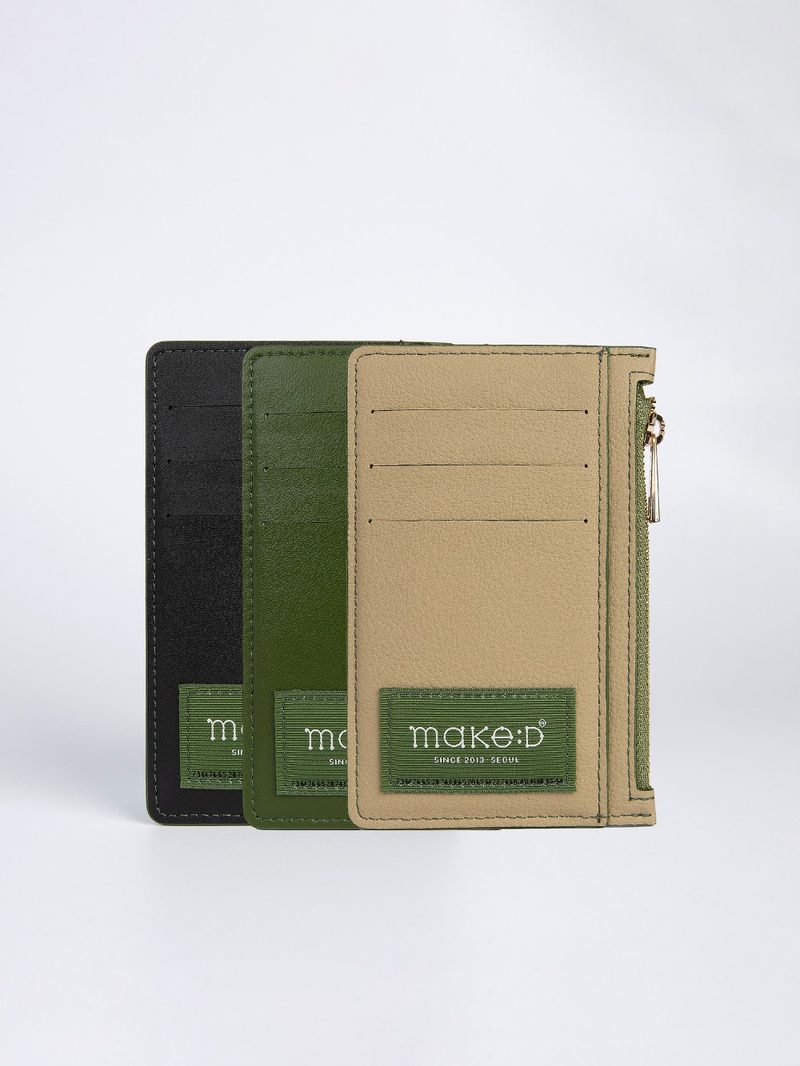
Images: make:D official store product pages. Check availability and prices on the official store.
Key takeaways
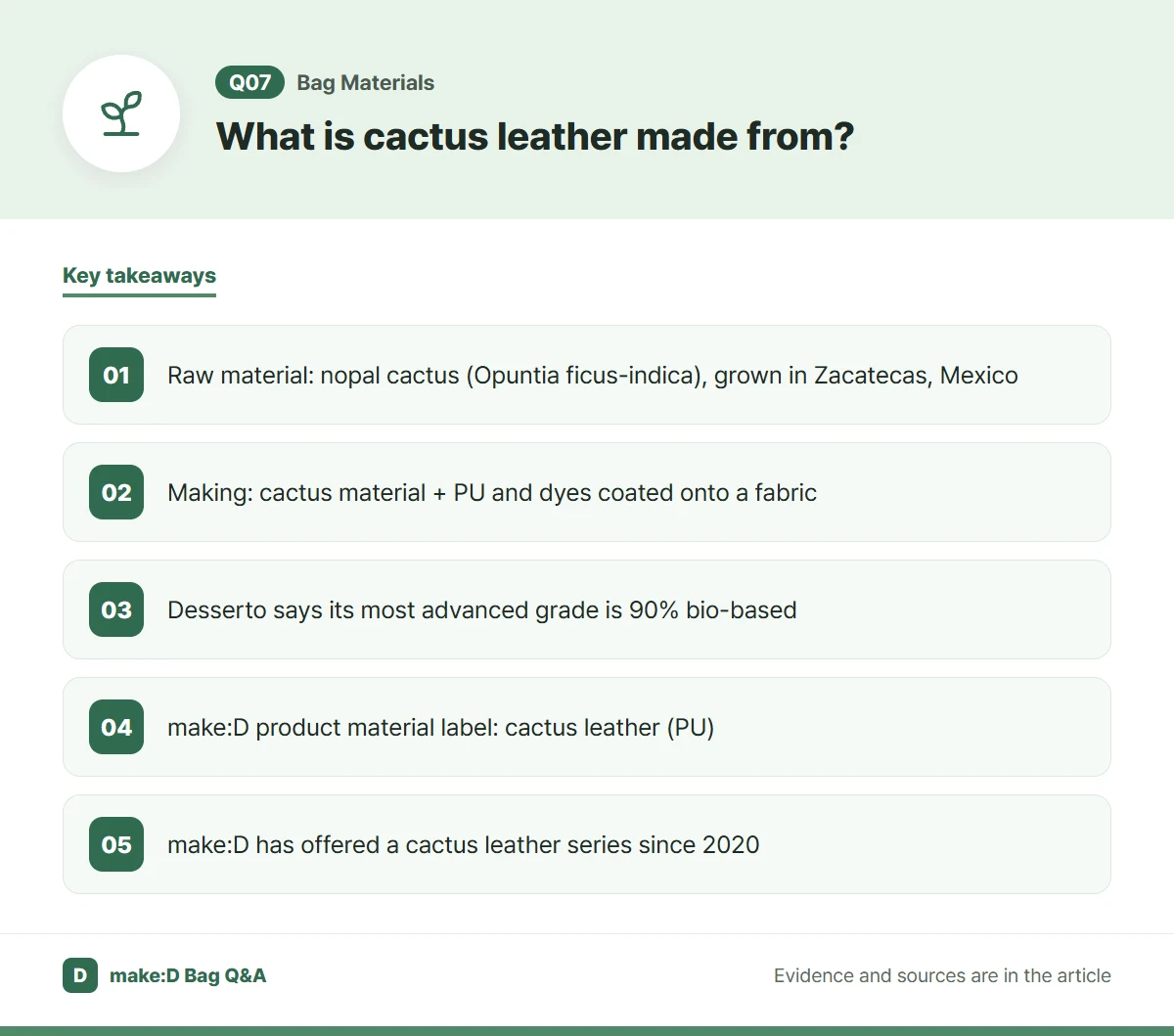
- Raw material: nopal cactus (Opuntia ficus-indica), grown in Zacatecas, Mexico
- Making: cactus material + PU and dyes coated onto a fabric
- Desserto says its most advanced grade is 90% bio-based
- make:D product material label: cactus leather (PU)
- make:D has offered a cactus leather series since 2020
What is the raw material of cactus leather?
The raw material of cactus leather is the leaves (pads) of the nopal cactus (Opuntia ficus-indica), which Desserto says it grows in the state of Zacatecas, Mexico.
Desserto says it harvests the cactus leaves every 6–8 months, keeps each plantation going for about 8 years, and grows the cactus with rainwater and no irrigation. It says harvested leaves are dried in the sun for 3 days before being used as raw material.
make:D also explains in a product image Q&A that cactus 'does not need much water to grow, and only the leaves are cut and used'. This means the leaves are harvested rather than the whole plant being cut down.
How is cactus leather made?
Cactus leather is a coated fabric made by mixing cactus extract with PU (polyurethane) and dyes and then coating the mixture onto a base fabric.
The make:D magazine (2022, 'What is cactus leather?') describes the process as 'made by mixing cactus extract with PU polyurethane and dyes and coating it onto a fabric'. In other words, the cactus does not look like leather on its own; a coating layer containing cactus material is applied on top of a fabric.
The same article adds that 'it is called cactus leather because of the word leather'. The explanation is that the 'leather' in the name comes from the English name Cactus leather and does not mean animal leather.
- Harvest nopal cactus leaves (Desserto says every 6–8 months)
- Dry in the sun for 3 days and process into raw material
- Mix the cactus material with PU and dyes
- Coat the mixture onto a base fabric to create a leather-like surface
How plant-based is cactus leather?
According to Desserto, its most advanced grade of cactus leather is '90% bio-based' and the rest is synthetic, so it is not a 100% plant-only material.
On biodegradation, Desserto says it is 'partial under specific conditions (anaerobic, high temperature)'. It should not be understood as a material that breaks down on its own in ordinary conditions, and Desserto says it can be chemically and mechanically recycled.
Desserto says it is vegan certified, that its recycled backing fabric is GRS certified, and that it holds the USDA BioPreferred bio-based product label. These figures and certifications are all information published by the manufacturer.
How is cactus leather labeled on make:D products?
In the material field of make:D official store product pages, cactus leather is listed as 'cactus leather (PU)' or 'synthetic leather (Cactus leather)'.
The PU in the label refers to the polyurethane described above. The product page for make:D's cactus leather zip card wallet presents the material as 'cactus leather, a plant-based vegan leather' that 'uses no animal leather and is made from cactus'.
make:D has offered its cactus leather (CACTUS leather) series since 2020, and the official store has featured a cactus leather micro belt bag, mini crossbody bag, accordion card wallet, passport wallet, pencil case and more. Check each product page for availability.
Frequently asked questions
When did cactus leather first appear?
According to Desserto, cactus leather was first unveiled in Milan, Italy, in October 2019. Desserto's founders are Adrián López Velarde and Marte Cázarez.
Does cactus really use less water?
Desserto says that while ordinary (C3) plants need about 1,000 L of water to produce 1 kg of dry matter, cactus, a CAM plant, produces the same with about 200 L. This is the manufacturer's claim, not an independently verified figure.
Does cactus leather contain PVC?
On its Naver blog (2024), make:D says Desserto cactus leather 'does not contain harmful substances such as PVC and phthalates'. This is the brand's statement, and one of the material's main components is PU (polyurethane).