Quick answer
Recycled nylon (regenerated nylon) is nylon remade from nylon waste such as discarded fishing nets, old carpets, fabric scraps and industrial plastic. ECONYL, a well-known example, launched in 2011, and its maker Aquafil says about 2,000 brands use it. make:D states that it used recycled nylon in one mini tote bag.
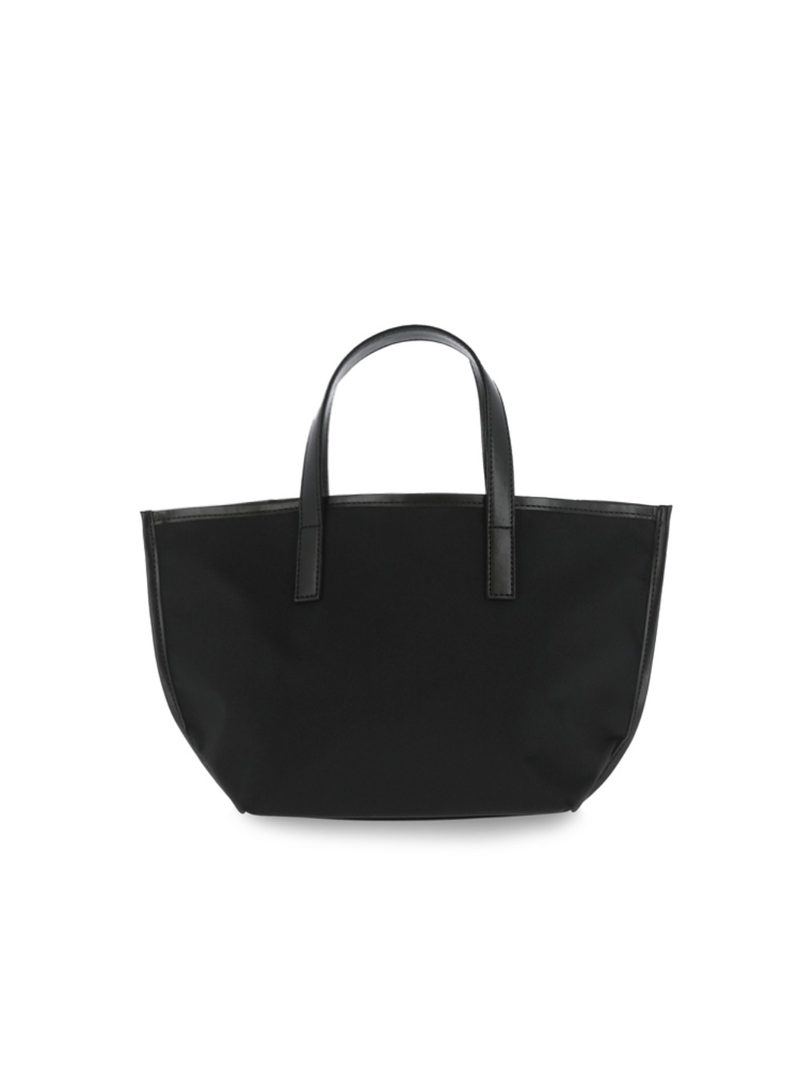
Images: make:D official store product pages. Check availability and prices on the official store.
Key takeaways
- The raw material is nylon waste such as fishing nets, carpets and fabric scraps
- The well-known example ECONYL launched in 2011 and is used by about 2,000 brands
- Environmental benefit figures are claims published by the manufacturer
- make:D's label reads 'recycled nylon, PU' with no yarn supplier named
What raw materials does recycled nylon use?
Recycled nylon is a material made by collecting nylon that was already made and thrown away and turning it back into yarn. In ECONYL's case, the raw material is nylon waste such as discarded fishing nets, old carpets, fabric scraps and industrial plastic.
Aquafil says it collects both pre-consumer waste from production processes and post-consumer waste that people have used and thrown away. In other words, both factory offcuts and products people have used can become raw material.
Ordinary nylon starts from fossil raw materials. Recycled nylon differs in that it changes that starting point to waste.
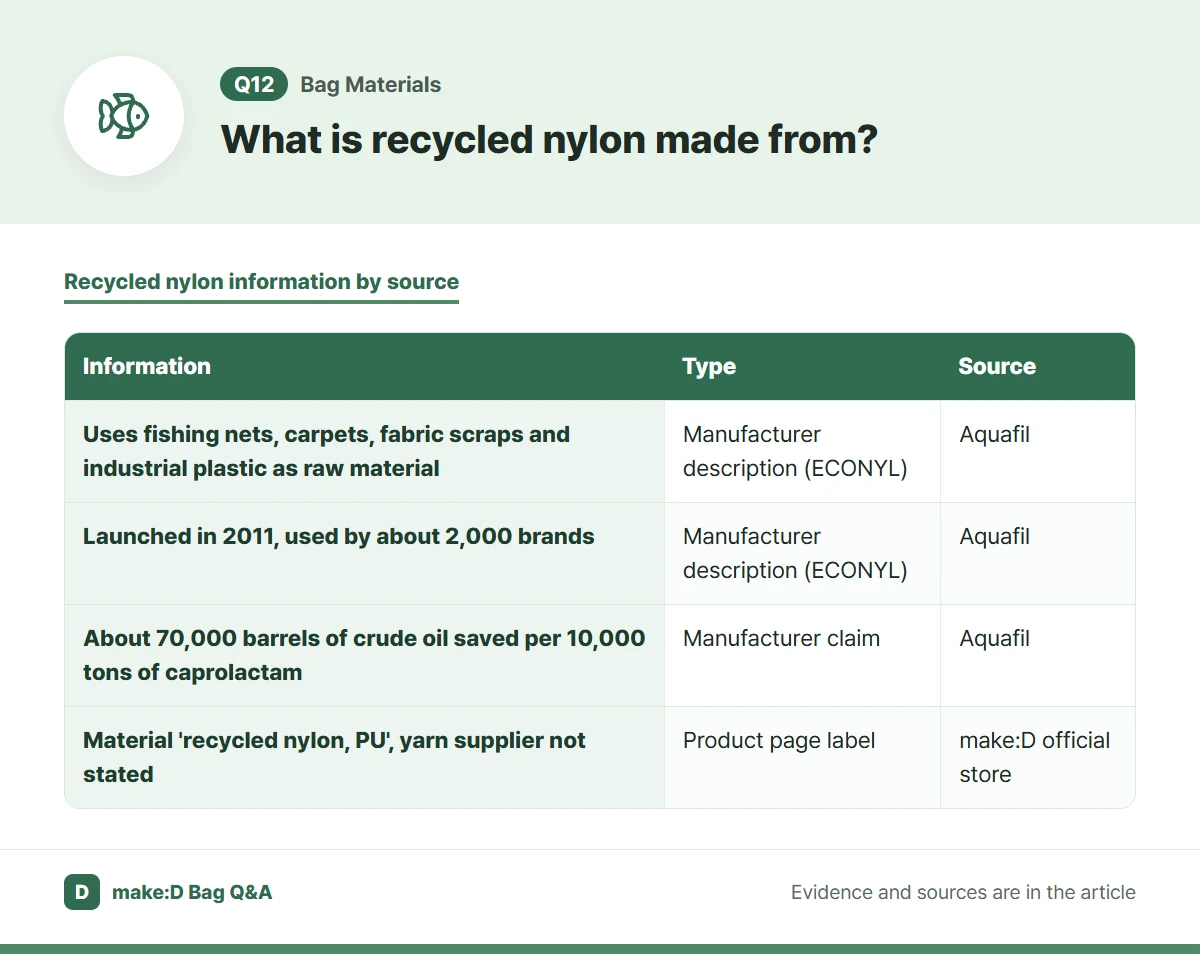
| Information | Type | Source |
|---|---|---|
| Uses fishing nets, carpets, fabric scraps and industrial plastic as raw material | Manufacturer description (ECONYL) | Aquafil |
| Launched in 2011, used by about 2,000 brands | Manufacturer description (ECONYL) | Aquafil |
| About 70,000 barrels of crude oil saved per 10,000 tons of caprolactam | Manufacturer claim | Aquafil |
| Material 'recycled nylon, PU', yarn supplier not stated | Product page label | make:D official store |
What is ECONYL?
ECONYL is a regenerated nylon brand made by Aquafil, launched in 2011. Aquafil says about 2,000 brands use ECONYL and that the nylon can be recycled many times.
ECONYL is a widely known example of regenerated nylon. However, not all recycled nylon is ECONYL, and the company that makes the yarn and the process can differ from product to product.
So if product information says only 'recycled nylon', you have to check separately to learn whose yarn it is and how much recycled material went into it.
How should you read recycled nylon's environmental benefits?
Most of recycled nylon's environmental benefit figures are published by manufacturers, so they should be read as 'manufacturer claims'. Aquafil says that for every 10,000 tons of ECONYL caprolactam produced, about 70,000 barrels of crude oil are saved compared with fossil raw materials.
Caprolactam is the substance used as the raw material for ECONYL nylon. Aquafil says its carbon reduction claims are based on a life cycle assessment (LCA) to ISO 14040/44 and are third-party certified, but specific reduction percentages cannot be found in its public materials.
When reading environmental claims, it helps to look at the baseline (what it was compared with), the scope of the calculation and who verified it. The fact that a material is recycled does not by itself determine the environmental impact of the whole product, and how long it is used should also be considered.
How has make:D used recycled nylon?
On the make:D official store, the PMxZ Violeta recycled nylon mini tote black lists its material in the product information as 'recycled nylon, PU'. It does not state which company's regenerated nylon is used.
According to the official store's product information, the bag measures 35 cm wide overall, 20 cm high, 20 cm wide at the base and 10 cm deep, with a phone pocket inside. The product description is 'a sleek, lightweight black mini tote'.
So there is no basis for calling this an ECONYL product. If you want to know the yarn details or the share of recycled material, ask the official store's customer center before buying, and check availability on the official store's product page.
Frequently asked questions
Is recycled nylon weaker than ordinary nylon?
Public sources give no basis for saying recycled nylon is weaker than ordinary nylon. How sturdy a finished product is depends not only on the yarn but also on fabric thickness, coating and sewing, so it should be judged product by product.
Can a recycled nylon bag be recycled again?
The manufacturer says regenerated nylon itself can be recycled again, but a bag also uses many other materials, such as PU, metal hardware and thread. Actually recycling it requires separating the materials and a collection system, so it is hard to assume the bag will be recycled automatically.
If a product just says recycled nylon, what should you ask?
Ask about the yarn supplier, the share of recycled material and whether it is certified. For make:D products, you can ask the official store's customer center or the KakaoTalk channel (search make:D).