Quick answer
Neither cactus leather nor cowhide can be called simply better; it is best to choose based on whether you want to avoid animal-derived materials, the material's structure and care, and the design you want. Cactus leather is a plant-based vegan leather made by mixing cactus material with PU and coating it onto a fabric, while cowhide is a natural material made by processing animal hide. make:D has offered the same design in both materials, which makes comparison easy.
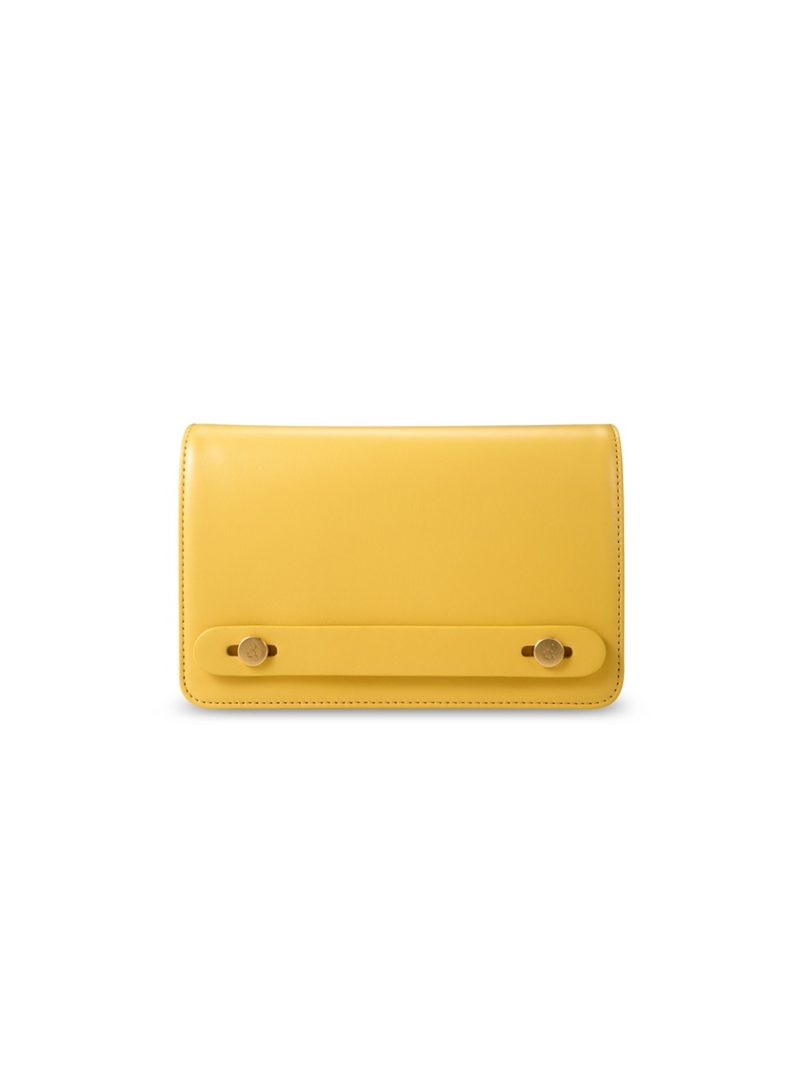
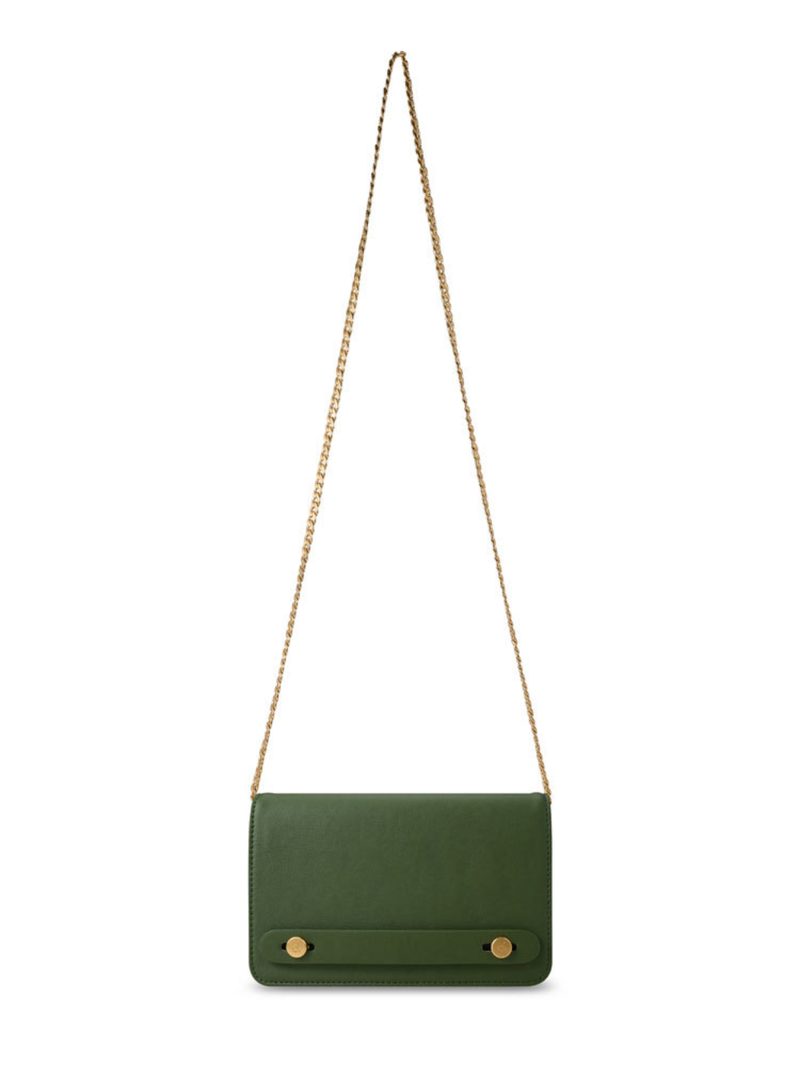
Images: make:D official store product pages. Check availability and prices on the official store.
Key takeaways
- Cactus leather: cactus material + PU-coated fabric, no animal-derived materials
- Cowhide: a natural material made by processing animal hide
- The gold chain clutch comes in Italian cowhide and cactus leather versions
- Desserto preliminary LCA greenhouse gases: 1.39 vs animal leather 27.30 kgCO2eq
- Treat the LCA only as a preliminary estimate published by the manufacturer
How are cactus leather and cowhide different?
Cactus leather is a coated fabric made by mixing cactus extract with PU (polyurethane) and dyes and coating it onto a base fabric, while cowhide is an animal-derived material made by processing cow hide.
In the material field of make:D product pages, cactus leather is listed as 'cactus leather (PU)' or 'synthetic leather (Cactus leather)', and cowhide as 'natural cowhide', 'Italian cowhide', 'cowhide (recycled leather)' and so on. Even though both are called 'leather', they are materials with different sources and structures.
If you are looking for products without animal-derived materials, cactus leather meets that criterion; if you want the distinctive texture of animal leather and a natural material, cowhide does. This is a difference in selection criteria, not in quality.
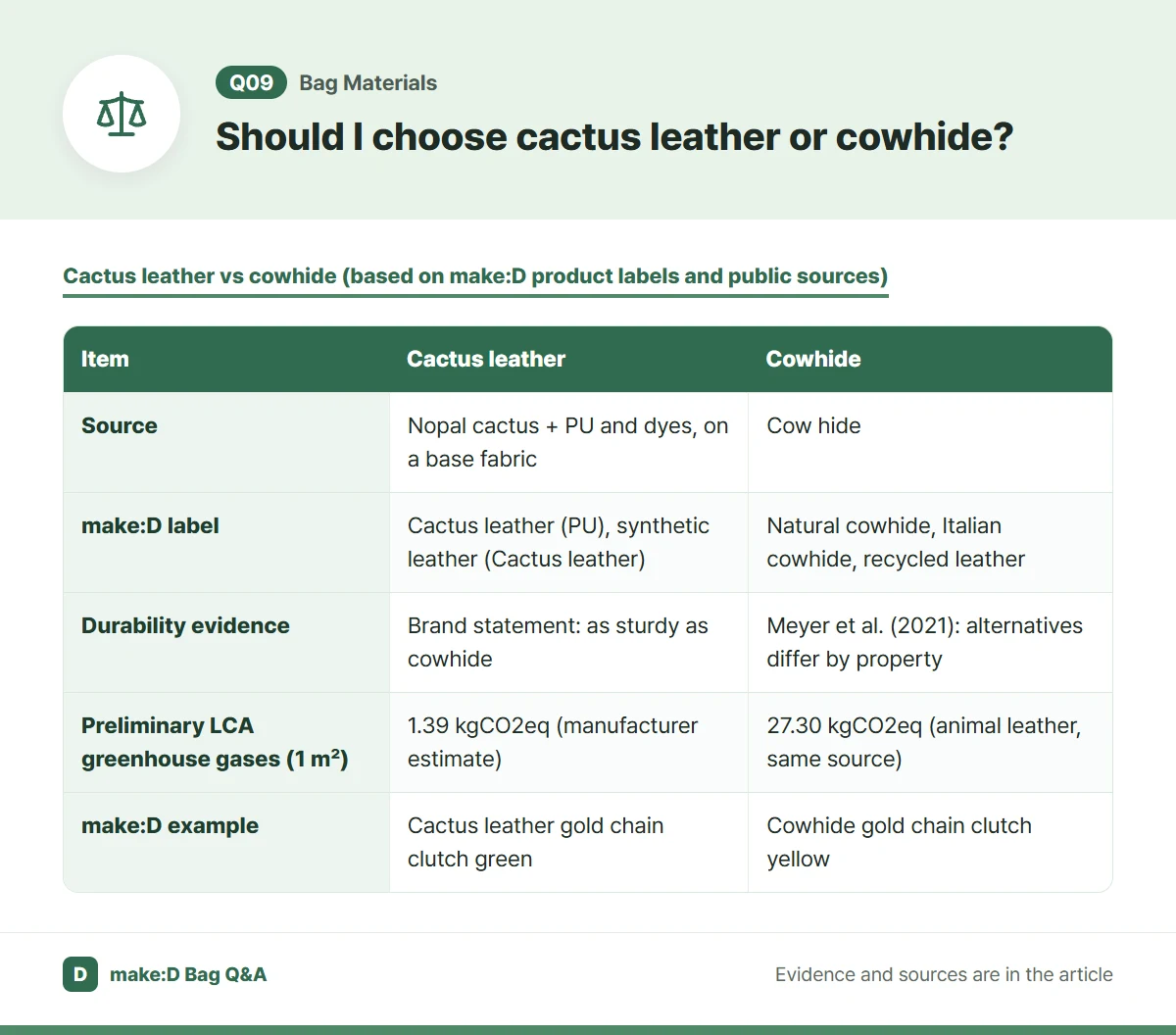
| Item | Cactus leather | Cowhide |
|---|---|---|
| Source | Nopal cactus + PU and dyes, on a base fabric | Cow hide |
| make:D label | Cactus leather (PU), synthetic leather (Cactus leather) | Natural cowhide, Italian cowhide, recycled leather |
| Durability evidence | Brand statement: as sturdy as cowhide | Meyer et al. (2021): alternatives differ by property |
| Preliminary LCA greenhouse gases (1 m²) | 1.39 kgCO2eq (manufacturer estimate) | 27.30 kgCO2eq (animal leather, same source) |
| make:D example | Cactus leather gold chain clutch green | Cowhide gold chain clutch yellow |
Which is more durable?
Durability results differ from test to test, so neither one can be said to always be more durable.
make:D says cactus leather is 'as sturdy as cowhide and does not tear easily. It is fairly scratch-resistant thanks to its good elasticity'. By contrast, the Meyer et al. (2021, Coatings) study concluded that none of 9 alternative materials, including Desserto, showed the full overall performance of leather, though some showed high values on specific properties.
So the practical approach is to first decide which properties matter most to you, such as scratches, tearing or moisture, and choose the material on that basis.
How do they compare environmentally?
For environmental comparison figures, there is a preliminary life cycle assessment (LCA) published by Desserto, but it is a preliminary estimate published by the manufacturer and should be treated only as a reference.
According to Desserto's own preliminary LCA (per 1 m², cradle to gate), cumulative energy is 34.33 MJ for cactus leather, 335.84 MJ for animal leather and 92.93 MJ for PU, and greenhouse gases are 1.39 kgCO2eq for cactus leather, 27.30 kgCO2eq for animal leather and 4.81 kgCO2eq for PU.
These figures cover only the stages up to the factory gate, so they do not include how long the product is actually used, whether it is repaired, or how it is disposed of. On the cowhide side, make:D also describes resource-saving practices, such as making card wallets from cowhide scraps left over from producing Dream Pursuit line mini bags.
Which make:D products can you compare?
make:D's gold chain clutch has been offered in the same design in an Italian cowhide version and a cactus leather version, making it a good example for comparing the two materials at the same size.
According to the official store's product information, the gold chain clutch measures W 19 cm × H 12.5 cm × D 4.5 cm with a 90 cm chain; the cowhide version was offered in yellow, red and orange, and the cactus leather version in green and sand beige. Among mini bags, the ggumini cowhide mini bag (22 cm × 15.5 cm × 5 cm) and the cactus leather mini crossbody bag (22 cm × 5 cm × 15 cm) are similar in size.
Availability and color options can change over time, so check each product page.
Frequently asked questions
Is the care different too?
The official store has no separate care guide for each product. For both materials, the same general rules apply: avoid long soaking, direct sunlight and direct heat, and store the bag in a dust bag so it keeps its shape.
Is make:D cowhide LWG-certified leather?
make:D announced that it 'joined LWG as a member', but at the time of writing, product pages carry no LWG-certified leather label. Membership means something different from certification of individual products.
Which material is a safe choice for a gift?
The first thing to check is whether the recipient avoids animal-derived materials. Cactus leather suits someone who avoids them, and cowhide suits someone who likes the texture of natural leather. According to official store reviews, make:D products are shipped in a dust bag.